The Future of P2P Payments: What Technologies Are Ahead?
The world of peer-to-peer (P2P) payments has undergone a dramatic transformation in the last decade. From the days of waiting days for a check to clear, we now expect to send and receive money instantly, often with nothing more than a phone number or email address. But the evolution of P2P payments is far from over. As digital ecosystems mature and new technologies emerge, the next wave of P2P innovation is already on the horizon—promising to make sending money even faster, more secure, and accessible across the globe.
In this article, we explore the upcoming technologies set to redefine P2P payments, the trends driving these changes, and what consumers and businesses can expect in the years ahead.
The Rise of Real-Time Payments and Global Connectivity
One of the most significant shifts in P2P payments is the push toward real-time, cross-border transactions. While instant money transfers within a single country are now commonplace—thanks to platforms like Venmo, Zelle, and Cash App—in 2023, only about 29% of global transactions occurred in real time, according to ACI Worldwide. This is set to change rapidly.
.png)
Several factors are driving this progress:
- Expansion of real-time payment infrastructures: Countries like India (with UPI), Brazil (with Pix), and the EU (with SEPA Instant) have dramatically increased adoption of instant payment systems. The U.S. launched the FedNow Service in July 2023, aiming to bring real-time capabilities to more banks. - Interoperability initiatives: Organizations such as SWIFT and the Bank for International Settlements are piloting projects to let different countries’ real-time payment systems "talk" to each other, making cross-border P2P as seamless as domestic. - Remittance innovations: Global remittance flows hit $831 billion in 2022 (World Bank), and new technologies promise to cut costs, speed up transfers, and improve transparency for migrants and expats sending money home.As these platforms mature, the future of P2P payments will see the barriers of time zones and borders fade—unlocking new opportunities for individuals and businesses alike.
Biometric Security and AI-Based Fraud Prevention
As P2P payments become more widespread, the need for robust security grows. In 2022, reported losses to payment fraud in the U.S. exceeded $8.8 billion (Federal Trade Commission), with P2P scams on the rise. The future of P2P payments will be shaped by advanced technologies aimed at making transactions safer, without adding friction for users.
Key innovations include:
- Biometric authentication: The use of facial recognition, fingerprint scanning, and even voice ID is becoming standard for identity verification. According to Juniper Research, over 1.4 billion people will use facial recognition for payments by 2025. - Continuous authentication: Instead of one-time checks, AI algorithms can analyze user behavior in real time—monitoring typing speed, device movements, and even navigation patterns to spot suspicious activity. - Machine learning fraud detection: By analyzing millions of transactions, AI can identify anomalous patterns and flag or block fraudulent payments instantly, reducing false positives compared to rule-based systems.These technologies will not only protect users but also build trust in P2P platforms, paving the way for broader adoption across demographics and geographies.
Digital Identity and Decentralized Verification
One of the biggest challenges in P2P payments remains identity verification, especially across borders or for those without traditional bank accounts. The future lies in digital identity solutions that are portable, secure, and privacy-centric.
Emerging trends include:
- Self-sovereign identity (SSI): Using blockchain and cryptography, SSI allows individuals to control their own digital identity—sharing only the information needed for a transaction. This reduces fraud risk and simplifies onboarding. - Government-backed digital IDs: Countries like Estonia and Singapore have rolled out national digital identity programs, enabling residents to transact securely across financial services. The World Bank reports that over 1 billion people still lack any form of official ID, and digital solutions can bridge this gap. - Credential verification platforms: Tech leaders such as Microsoft and Mastercard are piloting interoperable digital ID wallets, which can verify credentials (like age, citizenship, or account ownership) instantly for P2P transfers.These innovations will enable more people to access P2P payments, reduce onboarding time from days to minutes, and give users greater control over their personal data.
The Impact of CBDCs and Stablecoins on P2P Payments
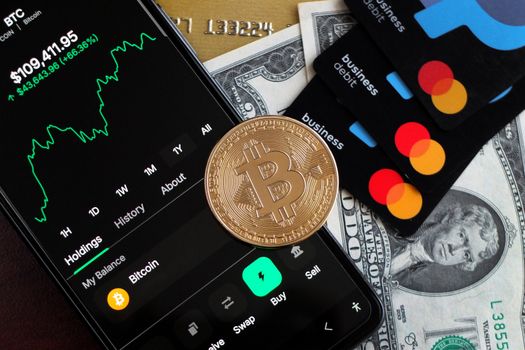
While cryptocurrencies like Bitcoin have long promised to disrupt payments, the next generation of digital currencies—Central Bank Digital Currencies (CBDCs) and stablecoins—are poised to make a more immediate impact on P2P transactions.
Here's how these technologies are changing the landscape:
- CBDCs: Over 130 countries, representing 98% of global GDP, are exploring or piloting CBDCs (Atlantic Council, 2024). Digital versions of national currencies could allow instant, 24/7 payments without intermediaries, lowering fees and expanding financial inclusion. - Stablecoins: Unlike volatile cryptocurrencies, stablecoins are pegged to real-world assets (like the US dollar or euro), making them suitable for everyday payments. In 2023, the total value of stablecoin transactions exceeded $7 trillion (Chainalysis). - Programmable payments: Both CBDCs and stablecoins can be embedded with smart contracts, enabling automated, conditional payments (for example, escrow or pay-on-delivery), which could revolutionize how individuals and businesses interact.Adoption remains in early stages, but as regulatory frameworks mature and user interfaces improve, CBDCs and stablecoins have the potential to make P2P transactions faster, more affordable, and universally accessible.
Beyond Mobile: The Next Interfaces for P2P Payments
While smartphones have been the primary channel for P2P payments, the future will see new devices and interfaces expand how, where, and when we can send money.
Emerging touchpoints include:
- Wearables: Smartwatches and fitness bands are increasingly equipped with payment capabilities. By 2025, analysts estimate over 800 million wearable payment devices will be in use worldwide (Statista). - Voice assistants: Platforms like Amazon Alexa and Google Assistant are piloting voice-based payments, allowing users to send money with a simple command—ideal for the visually impaired or hands-busy scenarios. - IoT devices: Connected cars, smart appliances, and even vending machines may soon facilitate P2P payments, enabling peer transactions in more environments.These new interfaces promise to make P2P payments even more convenient and accessible, reducing barriers for different user groups.
Comparing Next-Generation P2P Payment Technologies
To better understand the evolving landscape, here’s a comparative overview of major technologies shaping the future of P2P payments:
| Technology | Key Benefit | Current Adoption | Challenges | Example Use Case |
|---|---|---|---|---|
| Real-Time Payments | Instant money transfer | Growing (29% of global transactions in 2023) | Interoperability, global reach | Bank-to-bank transfers in seconds |
| Biometric Authentication | Enhanced security | 1.4B users expected by 2025 | Privacy, device compatibility | Fingerprint login for payment apps |
| Digital Identity | Faster, secure onboarding | Early stage, growing in select countries | Standardization, privacy laws | Cross-border P2P with instant ID verification |
| CBDCs & Stablecoins | Low-cost, 24/7 payments | Pilots in 130+ countries | Regulation, public trust | Direct P2P payments without banks |
| Wearables & IoT | Convenient, hands-free payments | 800M+ devices by 2025 (est.) | Security, user adoption | Sending money via smartwatch |
Looking Ahead: How New Technologies Will Shape P2P Payments
The next decade will redefine what’s possible in P2P payments. As real-time infrastructure matures, digital identities become portable, and programmable digital currencies emerge, users will benefit from payments that are not only fast and secure but also deeply integrated into the fabric of daily life.
Imagine sending money to a friend overseas in seconds, without worrying about currency conversion fees or waiting for bank hours. Or paying for a service with a wearable device, instantly verified by your digital ID—all protected by AI-powered security that works silently in the background. These scenarios are no longer science fiction but imminent realities, thanks to the convergence of payment innovation and digital transformation.
For businesses, the implications are equally profound. Merchants, gig economy platforms, and service providers will gain access to larger customer pools, faster settlement times, and new ways to automate and personalize transactions.
As always, challenges remain: privacy concerns, regulatory hurdles, and the need for global standards. But with billions of dollars in investment and collaboration among banks, fintechs, and governments, the future of P2P payments is set to be more connected, inclusive, and user-friendly than ever before.