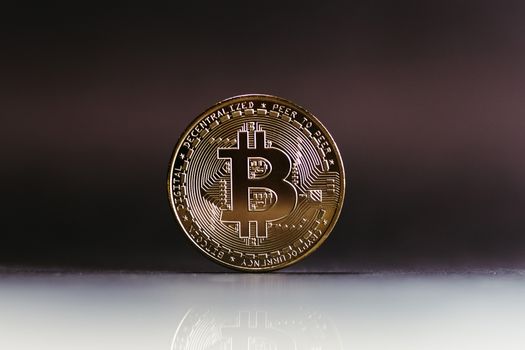
Sending money across borders has long been a challenge for individuals and businesses alike. Traditional international peer-to-peer (P2P) payment systems are often slow, expensive, and burdened by layers of intermediaries. Enter blockchain technology: a decentralized, transparent, and secure solution that is transforming how people send money internationally. In this article, we'll explore how blockchain facilitates international P2P payments, reduces costs, and drives financial inclusion on a global scale.
The Traditional International P2P Payment Landscape: Challenges and Costs
Before diving into blockchain’s transformative potential, it’s essential to understand the hurdles of conventional international money transfers. When someone in the United States wants to send money to a friend in India, the process typically involves multiple banks, clearing houses, and sometimes even manual verifications. Each intermediary charges a fee, and the transaction can take three to five business days to complete.
According to The World Bank, the global average cost of sending $200 internationally stood at 6.2% in 2023, with some remittance corridors like Sub-Saharan Africa reaching as high as 8%. Factors that contribute to these high costs include:
.png) - Currency conversion fees
- Service charges from banks and money transfer operators
- Compliance and anti-money laundering checks
- Delays due to time zone differences and banking hours
- Currency conversion fees
- Service charges from banks and money transfer operators
- Compliance and anti-money laundering checks
- Delays due to time zone differences and banking hours
These barriers not only eat into the money received by end-users but also exclude millions who lack access to formal banking services.
How Blockchain Streamlines International P2P Payments
Blockchain technology offers a fundamentally different approach to moving money across borders. At its core, a blockchain is a distributed ledger that records transactions in a secure, transparent, and immutable way. Here’s how it changes the game for international P2P payments:
1. $1: Blockchain operates on a peer-to-peer network, enabling direct transfers between sender and receiver without relying on multiple banks or third parties. This reduces the layers of approval and associated fees. 2. $1: On traditional rails, international transfers can take days. With blockchain-based solutions, transactions are settled within minutes or even seconds, regardless of holidays or time zones. 3. $1: Since the need for intermediaries is minimized, the fees for sending money via blockchain can be dramatically lower. Some blockchain payment networks, like Stellar, charge less than a penny per transaction. 4. $1: All transactions are recorded on a public ledger, reducing the risk of fraud and ensuring traceability. Smart contracts can automate compliance and verification, further reducing manual intervention.A notable example is Ripple, whose blockchain-based network enables financial institutions to settle cross-border payments instantly. As of 2023, RippleNet boasted over 300 financial partners worldwide and facilitated billions of dollars in transfers annually.
Comparing Blockchain-Based P2P Payments to Traditional Methods
To truly grasp the impact of blockchain in international P2P payments, let’s look at a side-by-side comparison with conventional systems:
| Aspect | Traditional International Transfers | Blockchain-Based P2P Payments |
|---|---|---|
| Average Transaction Time | 3-5 business days | Seconds to minutes |
| Average Fee (for $200) | 6.2% ($12.40) | 0.1%-1% ($0.20-$2) |
| Intermediaries | Multiple (banks, clearing houses, correspondents) | Minimal or none |
| Transparency | Opaque, limited tracking | Public ledger, end-to-end tracking |
| Availability | Banking hours, holidays affect processing | 24/7/365 |
| Access for Unbanked | Limited | Accessible via mobile wallets, crypto exchanges |
This comparison highlights blockchain’s ability to deliver faster, cheaper, and more transparent international payments.
Real-World Use Cases: Blockchain in Action for P2P Payments
Blockchain’s promise isn’t just theoretical—it’s already making a difference globally. Here are some real-world applications:
1. $1: In the Philippines, overseas workers rely on remittances sent through blockchain-powered services like Coins.ph. The platform enables users to receive funds instantly, with fees often below 1%. The Bangko Sentral ng Pilipinas (BSP) reported that blockchain-based remittances grew by over 30% in 2022, helping families receive more of what their loved ones send. 2. $1: Platforms like Bitcoin, Ethereum, and stablecoins such as USDC allow individuals to send funds across borders with minimal fees. In 2023, over $500 billion in value was transferred globally via cryptocurrencies, according to Chainalysis. Stablecoins, whose value is pegged to fiat currencies, are particularly popular for international P2P payments due to their price stability. 3. $1: The United Nations World Food Programme used blockchain to deliver cash assistance to over 100,000 refugees in Jordan, reducing administrative costs and ensuring funds reached intended recipients instantly.These examples underscore how blockchain can drive financial inclusion, cut costs, and create new opportunities for millions of people worldwide.
Barriers and Considerations: What’s Holding Blockchain Back?
Despite its promise, blockchain is not without challenges. Here are some of the key barriers to mainstream adoption in international P2P payments:
- $1: Different countries have varying stances on cryptocurrencies and blockchain technology. Regulatory clarity is necessary to ensure compliance and protect consumers. - $1: While stablecoins address this issue, cryptocurrencies like Bitcoin and Ethereum can experience significant price swings, which may deter users seeking predictable value transfers. - $1: The process of setting up a wallet or navigating crypto exchanges can be daunting for non-technical users. Improved interfaces and educational resources are needed. - $1: Not all blockchain networks can communicate seamlessly. Solutions like cross-chain protocols are under development to address this.However, industry players and regulators are actively working to resolve these obstacles. For instance, the European Union’s Markets in Crypto-Assets (MiCA) regulation is set to provide a comprehensive legal framework for digital assets by 2024.
The Future of International Payments: Blockchain’s Growing Role
The momentum behind blockchain in international P2P payments is undeniable. According to a 2023 report by Juniper Research, blockchain-powered cross-border payment transactions are expected to reach $4.4 trillion by 2027, up from $1.8 trillion in 2022—a compound annual growth rate of 21%. This rapid adoption is driven by:
- Increasing demand for low-cost remittance options, especially in developing markets - Expansion of crypto-friendly regulations - Growth in digital wallet usage, with over 2.8 billion wallets expected globally by the end of 2024Major financial institutions are also embracing blockchain. In 2022, JPMorgan Chase launched its Onyx blockchain platform for institutional payments, processing more than $1 billion daily.
As blockchain technology matures, we can expect even greater efficiency, security, and accessibility in global money movement.
Final Thoughts: Blockchain as a Catalyst for Affordable Global P2P Payments
Blockchain has emerged as a powerful tool for reimagining the way we send money across borders. By cutting out intermediaries, slashing costs, and settling payments in minutes, it empowers individuals and businesses to transact globally with unprecedented ease. While there are still hurdles to overcome, the trajectory is clear: blockchain is set to play an increasingly central role in the future of international P2P payments.
As regulatory frameworks evolve and technology becomes more user-friendly, millions more will benefit from faster, cheaper, and more transparent cross-border payments. For anyone seeking to move money internationally—whether for remittances, business, or aid—blockchain offers a glimpse into a brighter, more inclusive financial future.